A Continent, Not a Country
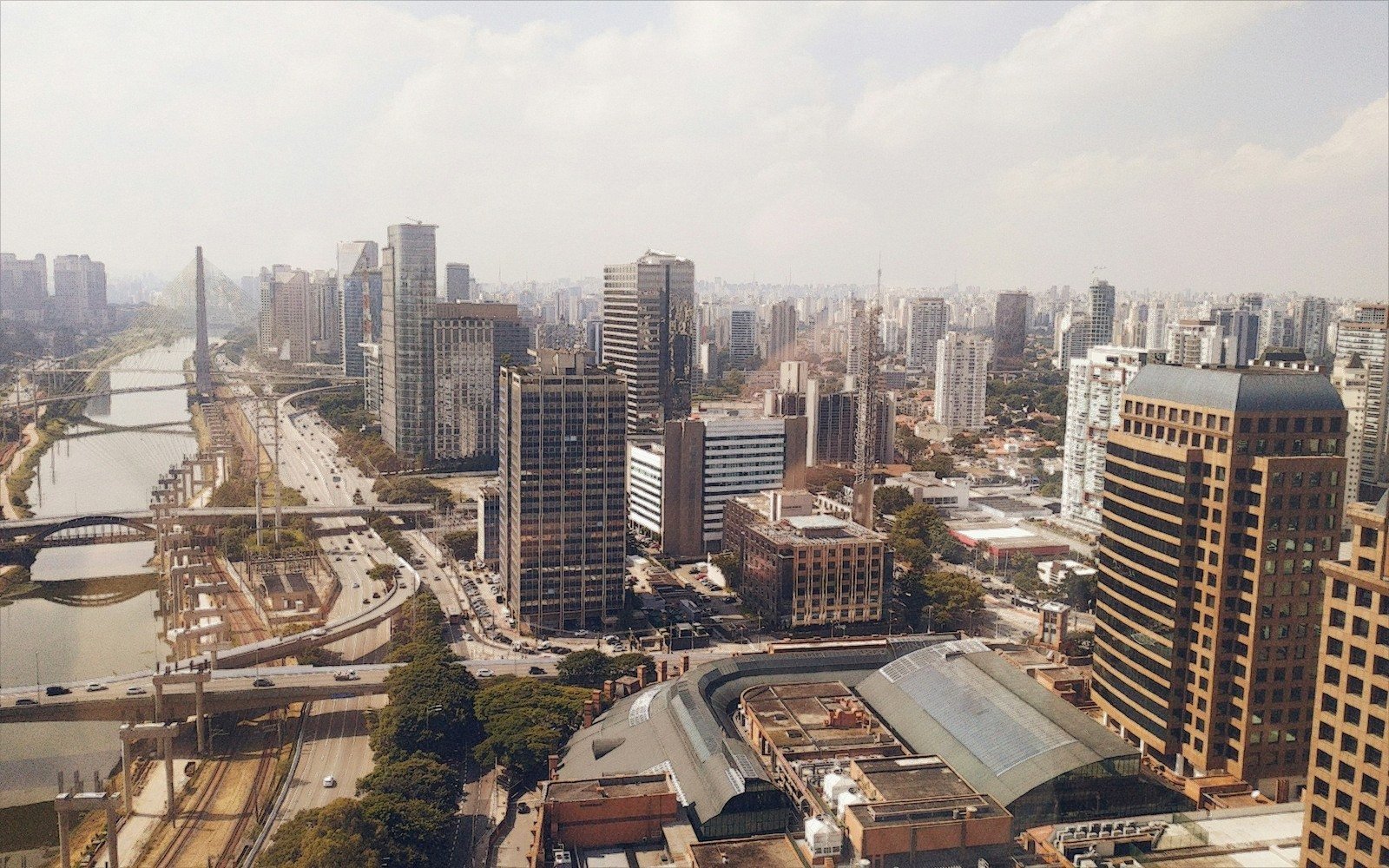
Brazil's first fact is its size. The fifth-largest country on earth by area, it holds more than 210 million people and generates roughly half of South America's entire economic output. Its territory spans the Amazon basin, the cerrado savanna, the semi-arid northeast, the temperate south and one of the world's most urbanised coastlines — each a distinct economy with its own industries, labour markets and politics. São Paulo alone would rank among Latin America's largest economies if it were a separate country; the contrast with Maranhão or Piauí, among Brazil's poorest states, is closer to the gap between Portugal and sub-Saharan Africa than to ordinary regional variation within a single nation.
That continental scale shapes everything. Brazil's domestic market is so large that for much of its industrial history the country could sustain entire manufacturing sectors — automobiles, pharmaceuticals, electronics — behind high tariffs and still achieve genuine economies of scale. The inward orientation this produced is Brazil's defining economic characteristic: exports as a share of GDP run well below what comparable emerging economies post, and Brazilian firms have historically invested in penetrating the domestic market rather than competing abroad. The country is not closed, exactly, but it has always felt less compelled to be open than its neighbours.
What Brazil Sells the World
When Brazil does trade internationally, the profile is overwhelmingly agricultural and extractive. It is the world's largest exporter of soybeans, sugar and orange juice, and among the top exporters of beef, poultry, coffee and cotton. The cerrado — once dismissed as barren scrubland — was transformed from the 1970s onward by Embrapa, the state agricultural research company, which adapted tropical crops for acidic soils and made Brazil an agribusiness superpower. That scientific feat is one of the great quiet stories of the twentieth-century global food system.
Iron ore anchors the extractive side. The Carajás deposit in Pará, operated by Vale, one of the world's largest mining companies, produces ore of unusually high grade and ships it in extraordinary volume to Chinese steel mills. Offshore oil has added a further dimension since the pre-salt discoveries beneath the Santos Basin in the late 2000s, and Petrobras — the state-controlled oil major — has since become one of the more consistently profitable energy companies in the Americas. Brazil's commodity complex is therefore genuinely diversified: it can absorb a fall in soy prices through oil, or a soft iron-ore market through agricultural strength.
China sits at the centre of this picture. China now takes a larger share of Brazilian exports than any other single destination — a dependency that has brought enormous revenue but also sharpened the country's sensitivity to cycles in Chinese industrial demand.
When Brazil does trade internationally, the profile is overwhelmingly agricultural and extractive.
Industry, Frustration and the Custo Brasil
Brazil built a real industrial base, which sets it apart from most of the region. The São Paulo metropolitan area hosts a dense manufacturing cluster — motor vehicles, aerospace (Embraer is headquartered in São José dos Campos), chemicals, textiles — that emerged behind decades of protection and state direction. That base still exists and still matters. But it has been losing ground, slowly and then more sharply, since the trade liberalisation of the early 1990s exposed it to international competition for the first time.
The term Brazilians reach for is custo Brasil — the Brazil cost: the aggregate weight of a tax system of remarkable complexity, infrastructure bottlenecks, rigid labour law, high interest rates and layers of bureaucracy that together inflate what it costs to produce anything inside the country. Brazil's roads, ports and railways remain inadequate for the volume of goods its farms produce; the trucking crisis of 2018 exposed how badly a soy crop from Mato Grosso can be held hostage by congested trucking routes to Santos. Its tax code is famously impenetrable — reform proposals have circulated for decades and a significant simplification was finally enacted in 2023, though implementation will take years. Interest rates have structurally run high, throttling investment and making the cost of credit a constant drag.
- 1970s onwardEmbrapa adapts crops for cerrado soils; Brazil becomes an agribusiness superpower
- early 1990strade liberalisation exposes Brazilian industry to international competition
- late 2000spre-salt oil discoveries beneath Santos Basin announced
- 2018trucking crisis exposes infrastructure bottlenecks in soy export routes
- 2023significant tax simplification reform enacted by Brazil's Congress
The Paradox of the Giant
The deepest tension in Brazil's economy is between its evident endowments and its persistent underperformance. The country has extraordinary agricultural productivity, genuine industrial capacity, a large and relatively young population, abundant fresh water, offshore oil and the world's largest tropical forest — an asset whose value in a carbon-constrained world is only beginning to be priced. And yet growth has been volatile, inequality among the highest in the world, and the middle-income plateau that has trapped much of Latin America has proven as sticky here as anywhere in the region.
Part of the answer lies in institutions: Brazil's federal structure, its proportional representation system and the sheer number of parties that must be managed to pass any legislation create a political environment where reform is slow and coalition-building expensive. Part lies in the historical preference for the domestic market over export discipline. And part is simply the paradox of scale — a country large enough to absorb its own inefficiencies for a very long time before the bill arrives.
Brazil is not a story of failure. It is a story of enormous promise repeatedly deferred, and of an economy so large and complex that the deferral itself carries a kind of momentum.