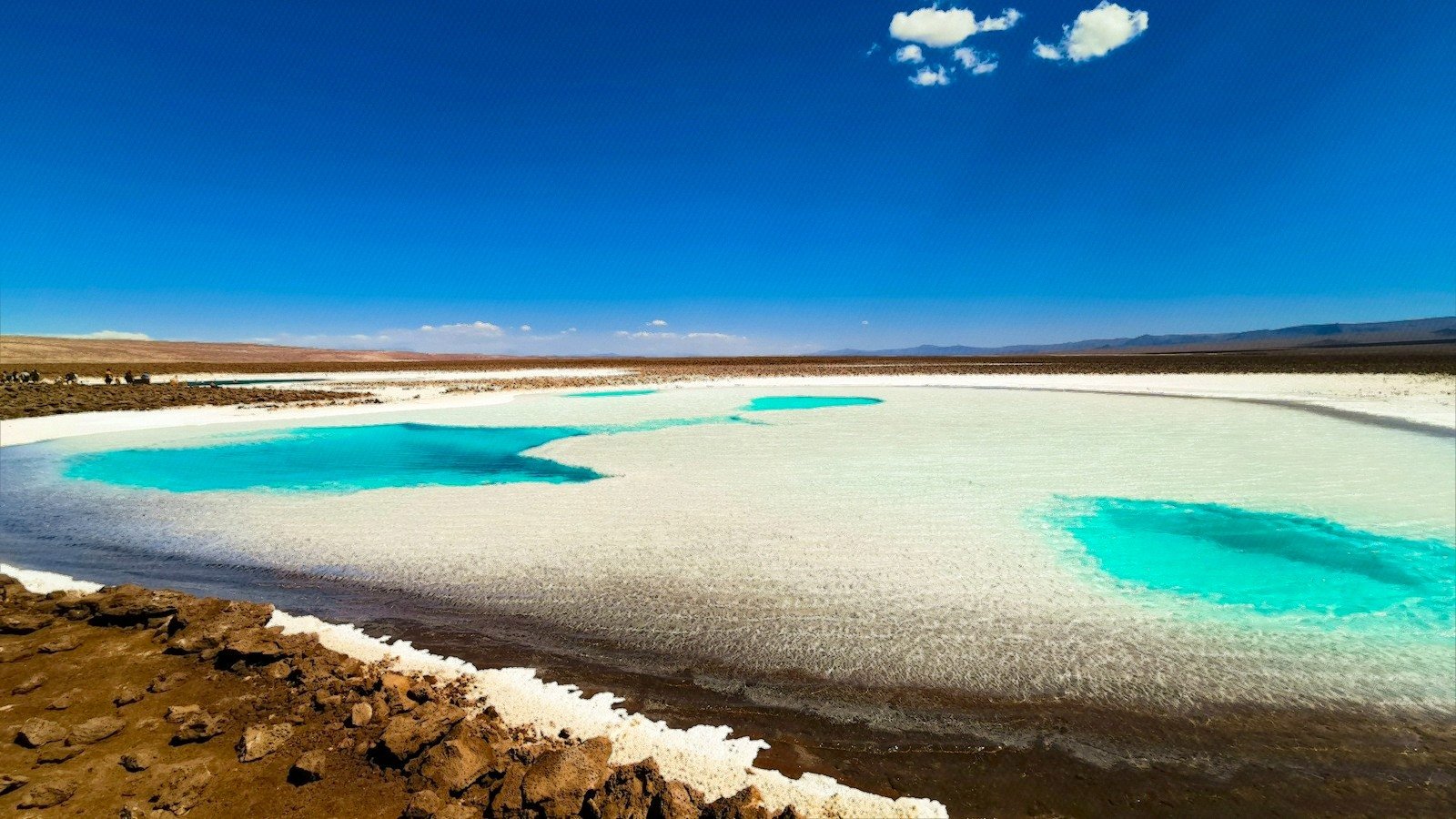
The Salt Flat Beneath the Future
Spread across the high-altitude deserts where Argentina, Chile and Bolivia meet lies the Atacama plateau and its chain of vast salt flats — the salares. Beneath the crust of these bleached, silent plains sits roughly half of the world's known lithium reserves, the mineral now central to every electric-vehicle battery, every grid-scale storage project, every smartphone. The Lithium Triangle is, in commodity terms, the new Gulf.
The geology is extraordinary. The Atacama in Chile, the Uyuni in Bolivia and Argentina's Puna region collectively hold reserves that no other part of the planet approaches. Chile and Argentina have led production, with Chile's SQM and private operators pumping lithium-rich brine from the Atacama for decades. Bolivia, despite holding what may be the single largest deposit at Salar de Uyuni, has produced comparatively little — its state enterprise YLB has struggled with the technical difficulty of high-magnesium brine and a long policy preference for nationalised, vertically integrated development over foreign partnerships.
That policy divergence is the triangle's defining tension. Chile and Argentina have attracted foreign capital — from the United States, Australia, China and Japan — into their lithium sectors at different speeds and on different terms. Bolivia has been more cautious, though recent agreements with Chinese firms signal a shift. The result is a triangle that shares a geology but not a strategy.
The deeper argument is the same one the commodity question poses for every Latin American resource: does raw export enrich the nation, or does value-added processing — battery components, cathode material, eventually cells — keep more of the gains at home? All three governments have gestured toward industrialisation. None has yet built a battery industry at meaningful scale.
Demand is not in doubt. The global electric-vehicle transition has made lithium a strategic material, and wealthy importing nations — the United States, the European Union, Japan — are actively courting the triangle's governments with supply-security agreements and investment pledges. That leverage is real and new.
The risk is also familiar: a commodity price that surged and then corrected sharply, revealing how quickly the terms of a boom can shift. The salares will define these three economies for decades. Whether they define them well depends less on geology than on governance.